The most common seagull in New Zealand一the「Tarāpunga」
- Tarāpunga lifespan is
very short.
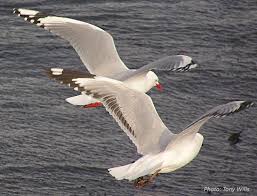
- Tarāpunga are very agile in the air.
- Tarāpunga has superb skills in hunting on the surface of the water.
1.Tarāpunga lifespan is very short.
This statement is incorrect.In fact,the Tarāpunga is among the longest-living species of birds. The average lifespan of adult birds is typically between 12.9 years (male) and 15.7 years (female),their potential lifespan is very long; some individuals on record have lived to 30 or even 32 years old.
2.Tarāpunga are very agile in the air.
Superior aerodynamic design
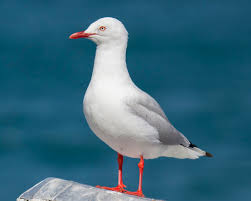
- Lightweight physique: Tarāpunga is about 37 cm in length, with adult males weighing only about 300 grams and females about 260 grams. This extremely light weight allows it to turn with a very small radius in the air, giving it a reaction speed far exceeding that of the larger Black-backed Gull.
- Wingtip control: Their gray wings are tipped with black and white flight feathers. Studies show that gulls can dynamically change the shape of their wings by adjusting their wrist and elbow joints to cope with sudden crosswinds or air current fluctuations.
- Tail feather braking: During descent or sharp turns, they unfold like fans and press down their tail feathers as aerodynamic brakes to precisely control speed.
Superb aerial tactics
- Diving and hovering: They often hover at high altitudes in the air, and once they spot a target (such as krill on the water or food in a human's hand), they can immediately switch to a low-angle "dive bombing" mode.
- Kleptoparasitism: Tarāpunga are typical "kleptoparasites" who use their agility to intercept other birds in the air and even precisely catch flying insects from swarms of flies around sea lions.
- Group avoidance: Even in dense flight formations of thousands of individuals, they can avoid collisions at high speeds, demonstrating exceptional spatial awareness and group coordination.
Adaptive flight in different environments
- Utilizing updrafts: In urban environments, they can utilize the vertical updrafts generated by buildings for energy-efficient flight, maintaining speeds above 12 meters per second without frequent wing flapping.
- Defensive maneuver: When their den is threatened (such as by a cat, weasel, or human approaching), they will perform a "swoop-and-soar" display, diving at close range with a piercing cry to deter intruders.
3.Tarāpunga has superb skills in hunting on the surface of the water.
Precise「shallow dive」
- Action details: After spotting prey at a height of about 5-10 meters, they will fold their wings and dive at high speed.
- Submersion depth: Unlike gannets that submerge completely, Tarāpunga usually only has its head, neck, or half its body submerged.
- Objective: This method is primarily used to catch schools of krill or small fish that float to the surface.
High-frequency 「hover pickup」
- Hovering: Utilizing powerful wing control, hovering or circling a few centimeters above the water surface.
- Predatory scooping: Like skimming across the water, they precisely scoop up plankton from the surface using only their beaks, without even needing their feet to touch the water. This allows them to maintain extremely high reaction speeds amidst complex waves.